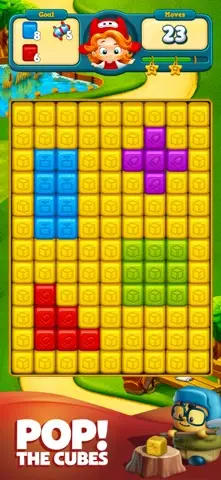
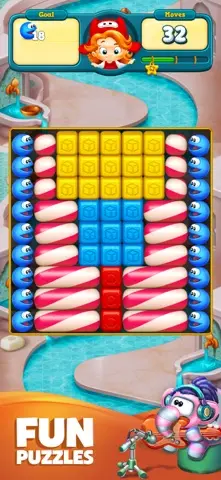
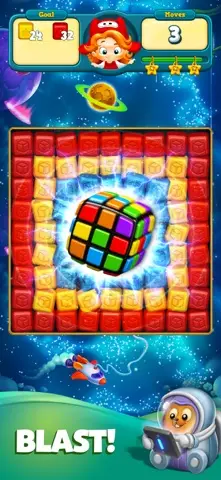
Two numbers appear before every level: what it wants, and how many moves you get. The ratio between them tells you what kind of play the level was built for, and it is visible before you touch anything.
Divide one number by the other
If a level asks for sixty tiles of one colour and gives you twenty moves, it needs an average of three per move, which is exactly what a plain match produces. That is a level built for steady ordinary play, and trying to be clever on it wastes moves.
If it asks for sixty in twelve moves, it needs five per move, which no plain match delivers. That level was built around special tiles and combinations, and playing it as an ordinary level will fail every time regardless of how well you play.
This single division, done before the first move, tells you which of the two you are in. It is the most useful three seconds available in these games.
Rough thresholds that hold across most of these games: under three goal items per move is ordinary play; three to five means you need a couple of specials; above five means the level expects combinations and probably a cascade.
Checking your pace halfway
The same arithmetic works mid-level and almost nobody does it. At the halfway point, compare what is left to do against what is left to do it with. If the remaining ratio is worse than the starting ratio, the level is drifting away from you and no amount of continued play will fix it by itself.
That is the moment to change something: spend a booster, commit to building a combination instead of taking small matches, or restart. All three are better than continuing on the assumption that a lucky cascade will arrive.
Restarting on purpose
Restarting a level you are going to lose is not giving up, it is refusing to pay for a loss twice. A level abandoned at move six costs one attempt and ten seconds. The same level played out to the end costs the same attempt and three minutes, and in the games that offer to sell you extra moves at the end, it also puts you in front of that offer at your least rational moment.
The one exception is a board where a large combination is genuinely one move from firing. Those do turn levels around. A general feeling that things might improve is not the same thing and usually is not.
Where the moves actually go
Track a losing attempt and the wasted moves are almost always in the same three categories.
- Tidying. Clearing a cluster that was in nobody's way because it was an easy match to see.
- Chasing a five. Two or three moves spent trying to assemble the strongest special on a board that never offered it.
- Firing early. Using a special the turn it appears rather than leaving it for a combination two turns later.
None of these feel like mistakes while you are making them, because each individual move looks reasonable. They only become visible when you count them afterwards, which is why the halfway pace check is worth building into the habit.
Levels designed to be failed once
Some levels in this genre are tuned so that a first attempt without knowing the layout is very unlikely to succeed, particularly the ones with locked sections or a goal hidden behind an obstacle. That is a design decision, not bad luck, and the useful response is to treat the first attempt as reconnaissance: play it out, watch where the goal actually is, and plan the second attempt properly. Recognising one of these early saves a lot of frustration, because it stops you from concluding that you played badly when the level simply was not visible yet.